The workshop module: dated workshops on this Space's value stream, run the way you'd run them on the floor — with the software holding the numbers.
Each workshop freezes the opening picture, then works in four stages:
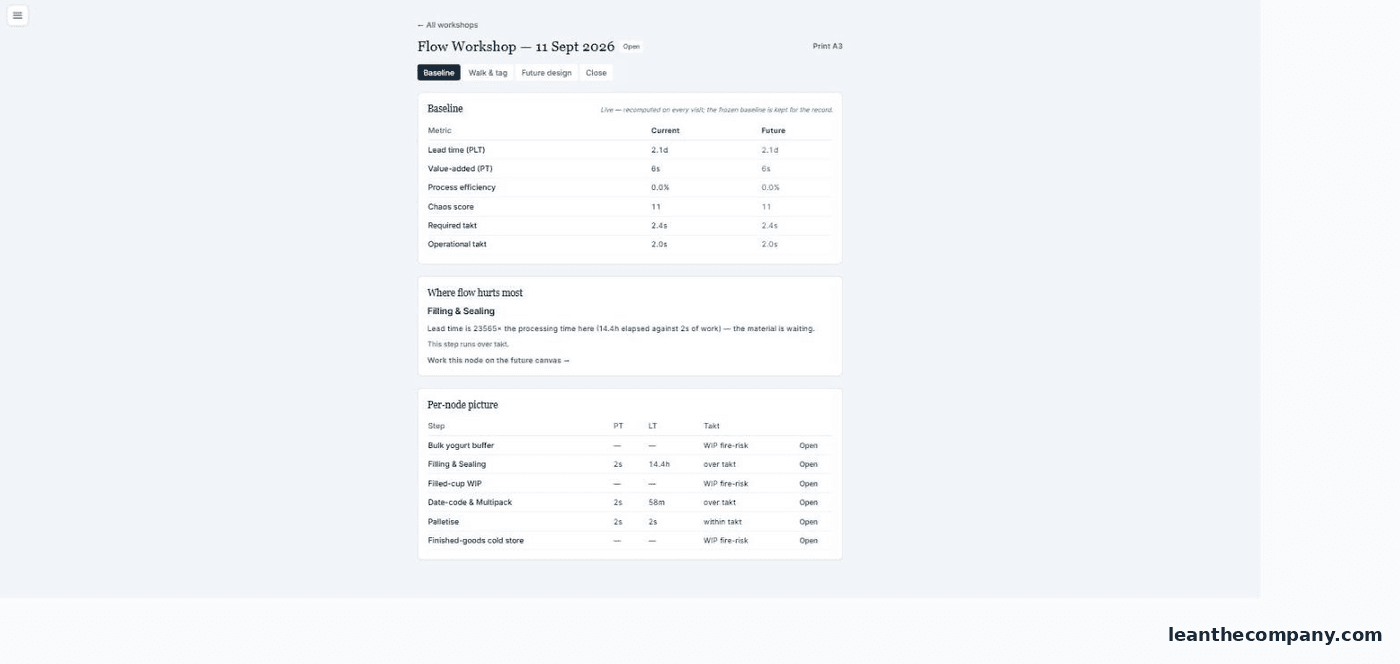
- Baseline — the current-vs-future KPI picture (lead time, value-added, process efficiency, Chaos score, takt) computed from your VSM, and where flow hurts most: the worst node, with the reason in plain words — "Lead time is 12× the processing time here — the material is waiting."
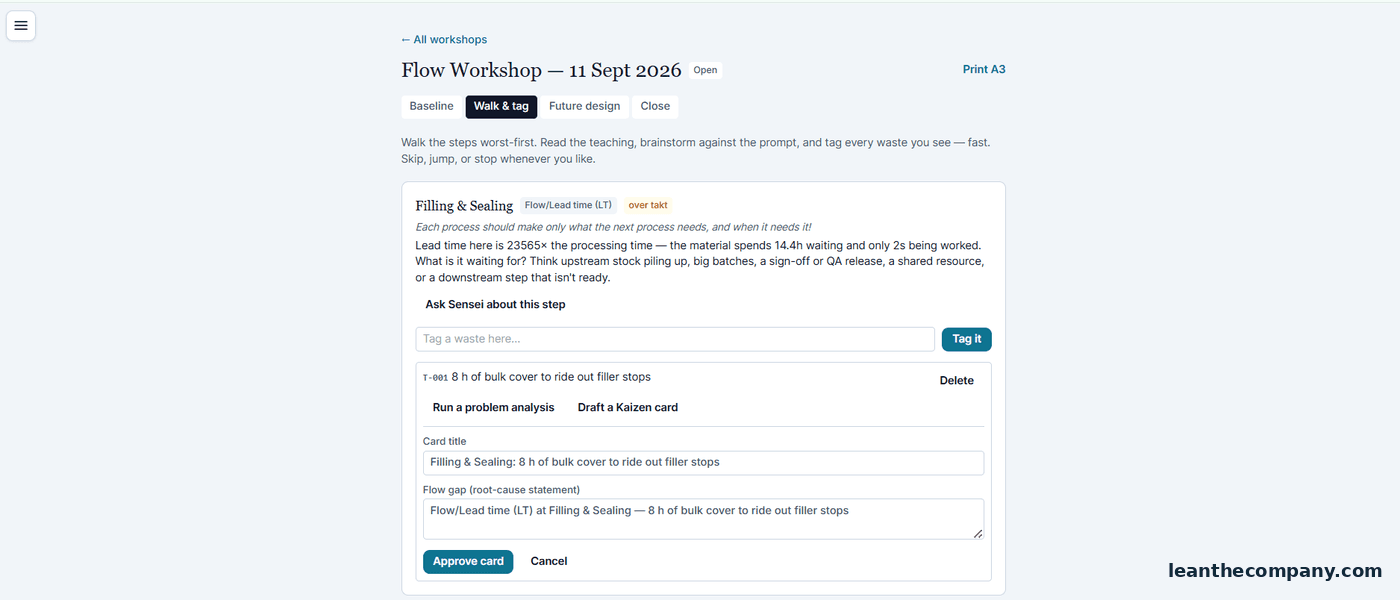
- Walk & tag — walk the steps worst-first. Read the teaching, brainstorm against the prompt, tag every waste you see — fast. A tag can become a problem analysis or a drafted Kaizen card on the spot, or stay a note.
- Future design — Seed future from current and apply the agreed improvements on the future canvas. Set the Targets board: lead time, process efficiency, Chaos score, takt attainment.
- Close — closing records the benchmark: baseline → target → projected, node-granular, into the record. Reopen later if you need to; the snapshot stays.
Every workshop prints as its own A3.